
Research Areas
Combining AI technology with clinical experience to advance burn medicine innovation, providing more precise medical services to patients
Innovative Research Achievements
We are committed to integrating the latest artificial intelligence technology with traditional medicine,
developing multiple breakthrough diagnostic and treatment technologies
3D Printed Personalized Nasal Reconstruction Technology

Innovation Breakthrough
For patients with nasal defects or deformities, we combine 3D printing technology with personalized medical design to develop precise surgical guidance systems for reconstruction.
Technical Advantages
- Personalized surgical guidance template production
- Improve surgical precision and success rate
- Reduce surgery time and recovery period
- Improve patient appearance and confidence
Application Results
Successfully applied to 50+ patients with a 95% reconstruction success rate, significantly improving patients' quality of life and mental health.
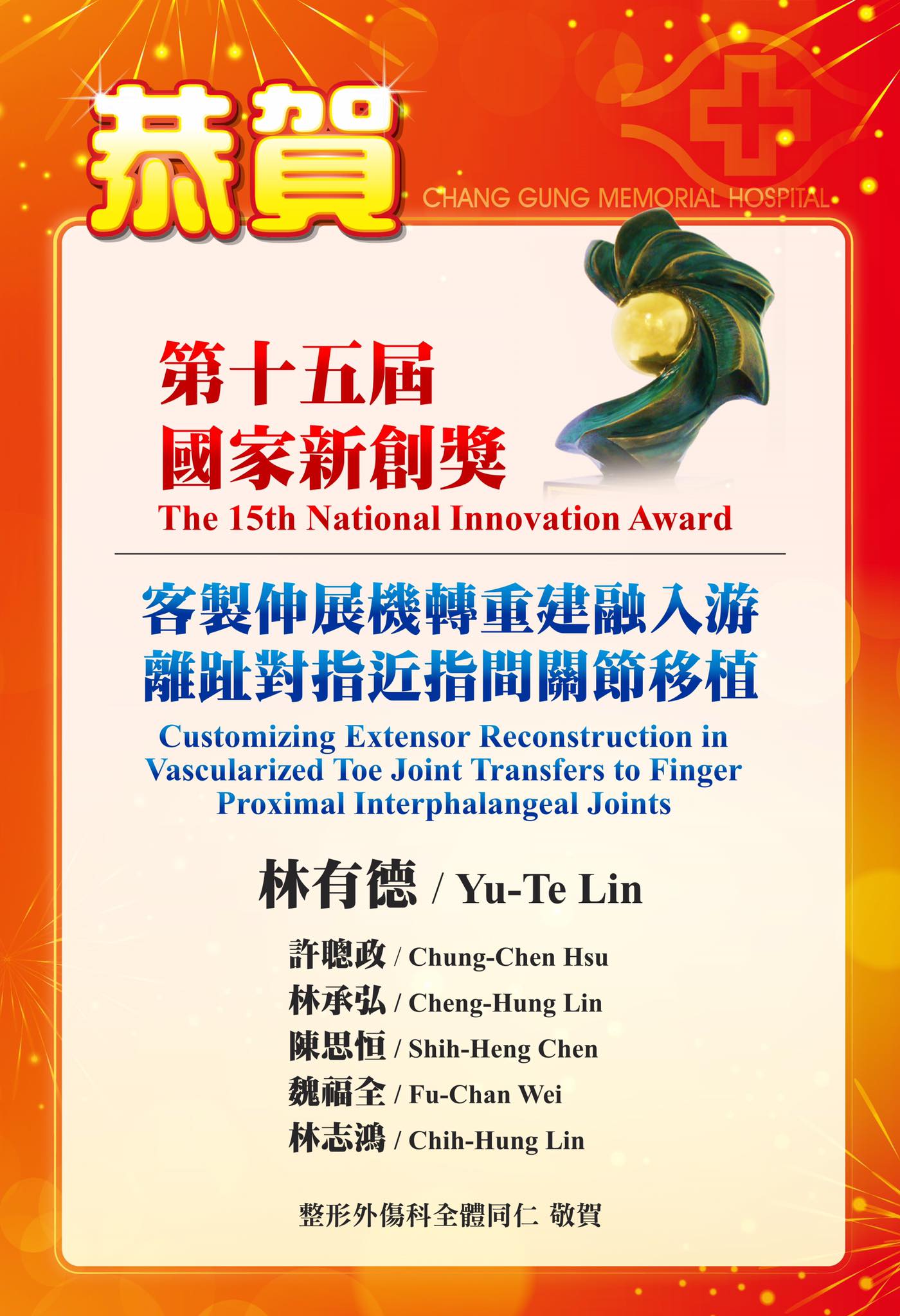
Customized Extensor Mechanism Reconstruction System
Research Motivation
Hand burns or trauma often lead to extensor dysfunction, seriously affecting patients' daily lives. Traditional treatment methods have limited effectiveness, so we developed an innovative customized extensor reconstruction system.
Innovation Features
- Personalized device design and manufacturing
- Combining surgery with rehabilitation training programs
- Intelligent monitoring and adjustment system
Application Results
Assisted 30+ patients with hand dysfunction to restore extensor function, achieving an 88% functional improvement rate and significantly enhancing daily life independence.
Intelligent Eyelid Function Assessment and Prediction System

Innovative Technology
Combining smartphone photography capabilities with artificial intelligence deep learning algorithms to develop a portable eyelid function assessment system. Through image analysis technology, accurately predicting post-surgical eyelid functional recovery.
Core Functions
- Precisely predict upper eyelid ptosis degree
- Assess lower eyelid margin retraction degree
- Analyze levator palpebrae muscle function
- Provide personalized surgical recommendations
Application Results
Successfully assisted 200+ patients with eyelid dysfunction in preoperative assessment, achieving 92% prediction accuracy and significantly improving surgical success rates and patient satisfaction.
Vision-Driven Intelligent Burn Analysis and Prediction System
Research Background
Traditional burn area and depth assessment relies mainly on physician experience, which can lead to subjective errors. To improve diagnostic accuracy and consistency, we have developed an intelligent burn analysis system based on deep learning.
Technical Features
- Automated burn area calculation with over 95% accuracy
- Deep learning model can identify different degrees of burns
- Real-time diagnostic report generation, improving medical efficiency
- Predict treatment outcomes and recovery timeline
System Architecture
Integrating image processing, machine learning, and clinical databases, providing comprehensive intelligent diagnostic support system
Application Results
This system has demonstrated excellent performance in clinical trials at our center, not only improving diagnostic accuracy but also significantly reducing diagnosis time. It is expected to help young physicians quickly build diagnostic capabilities and provide strong support for telemedicine.
Related Academic Publications
Recent important research achievements and international journal publications
Join Our Research Team
If you are interested in burn medicine research or would like to learn more about our research projects, please feel free to contact us. We look forward to working with more excellent researchers to advance medical development.